
This report has been developed using operational data, to provide an overview of performance and demand, and should be treated as indicative only. Operational data should be interpreted and used with caution and understanding of limitations outlined in caveats and data interpretation notes.
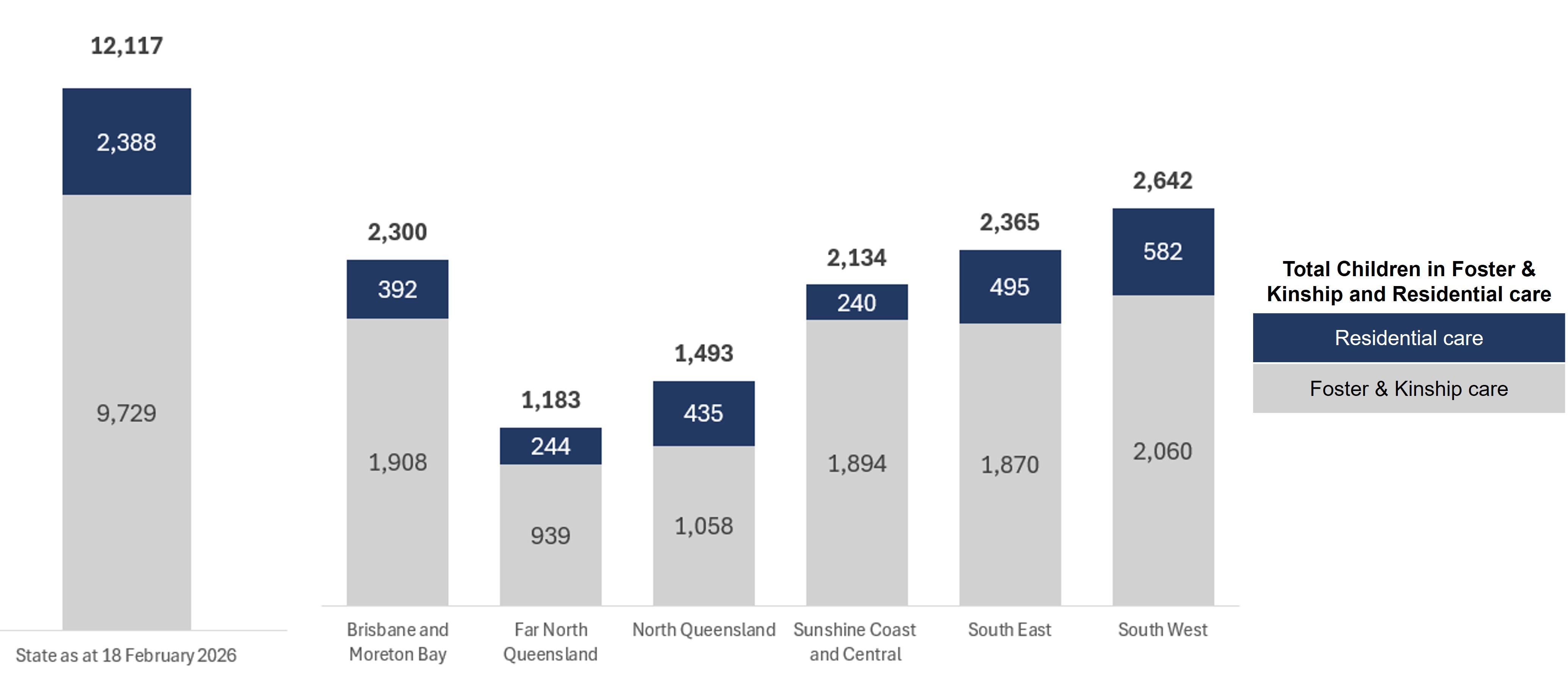
Children in Foster & Kinship and Residential Care
Footnotes and caveats
- Data is as at 18 February 2026.
Data interpretation notes
- When the Childrens Court grants custody or guardianship of a child to the chief executive (Director-General) of the department, it is the department's responsibility to find an appropriate care arrangement for the child.
- The department uses various care arrangements for the children in its care including family-based care (foster, kinship and provisionally approved carers) and residential care services.
- Reflects the point-in-time situation as at 18 February 2026.
- Data exclusions: Where children have multiple current and active care arrangement cases, only one has been retained (i.e. one child = one care arrangement case). Excludes children aged 18+, excludes cases where the child is subject to a Permanent Care Order, excludes cases where the child is subject to any intervention aside from a Child Protection Order.