
This report has been developed using operational data, to provide an overview of performance and demand, and should be treated as indicative only. Operational data should be interpreted and used with caution and understanding of limitations outlined in caveats and data interpretation notes.
Children Subject to Ongoing Intervention
Footnotes and caveats
- Data is as at 31 December 2025.
Data interpretation notes
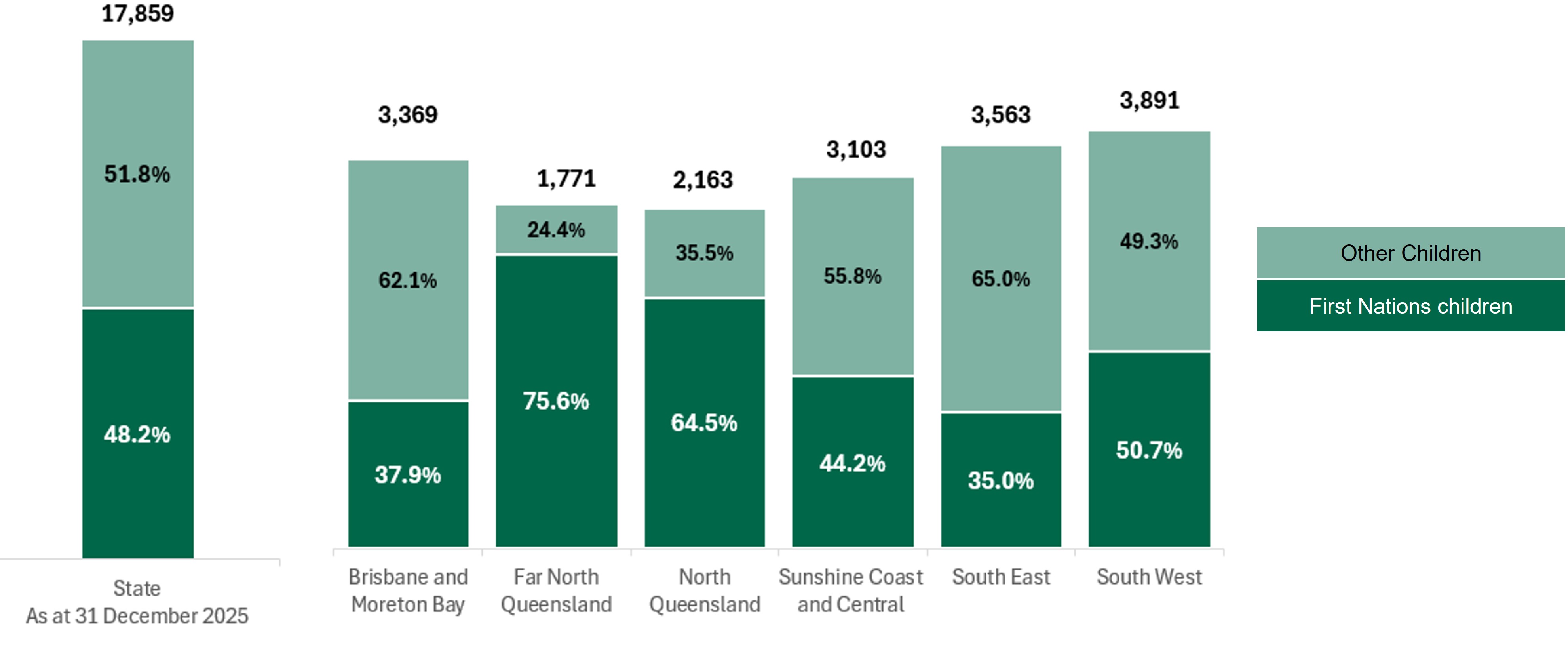
- When it is determined via an assessment that a child is in need of protection, intervention by the department is required. This is known as Ongoing Intervention (OI) and may be delivered while the child remains at home with family, or via out-of-home care.
- This data shows the number of children subject to Ongoing Intervention, statewide, by First Nations status of the child.
- Reflects the point-in-time situation as at 31 December 2025.
- Previous corporate data includes Child Protection Orders (CPO) and Intervention with Parental Agreement (IPA) only and excludes other case types.
- Operational data captures other case types, including Support Service cases and Undetermined cases (where an OI is open, but the case type detail is yet to be updated) and may contain some data quality issues. The operational data is higher than the corporate data count for this reason.
- Data exclusions: Excludes matters held in locations other than Child Safety regions (numbers are very low).